
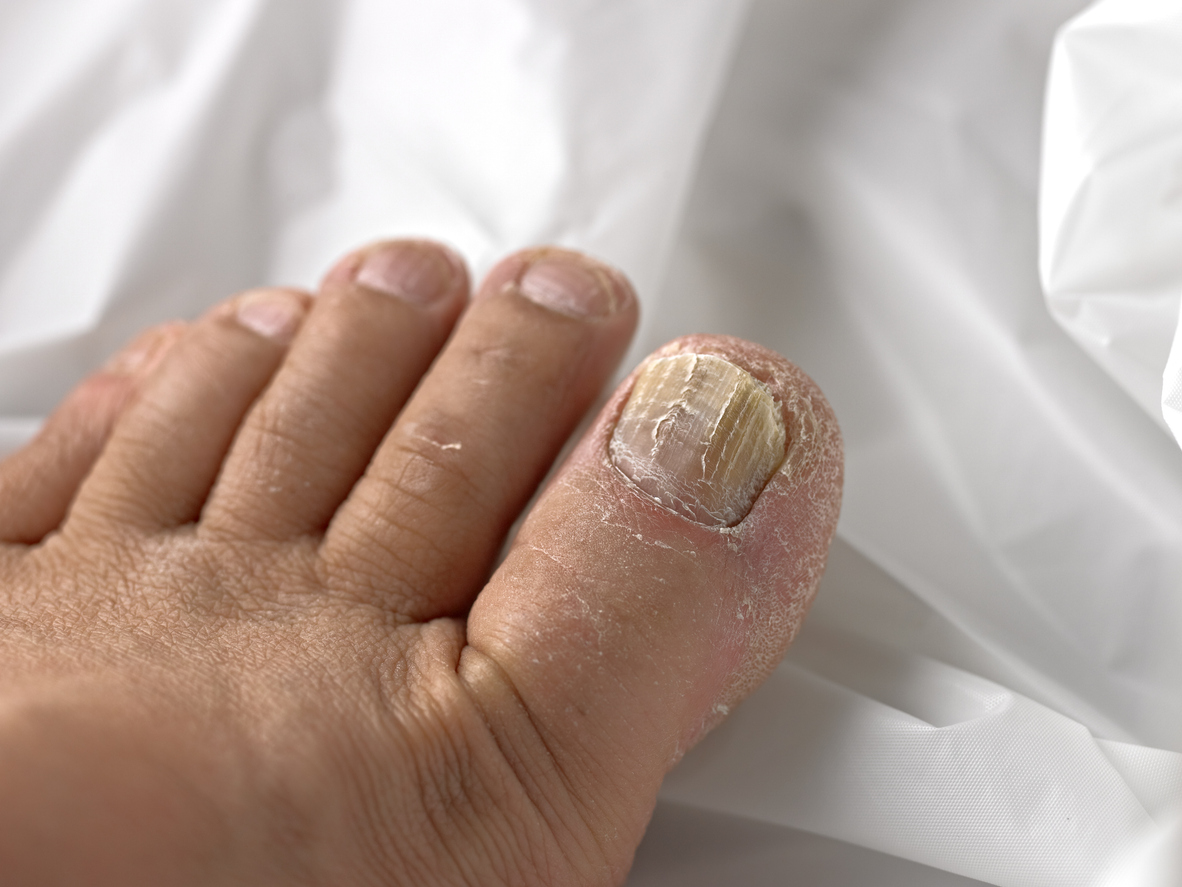
Toenail fungus is often the first thing that comes to mind when a nail turns yellow, thick, or brittle, but appearance alone doesn’t always reveal the cause. In Houston, Texas, our team at DermSurgery Associates diagnoses nail conditions and provides fungal infection treatment when fungus is responsible. Our physicians include Simo Huang, MD, FAAD, a board-certified dermatologist who specializes in general dermatology and dermatopathology.
What Does Toenail Fungus Look Like?
Toenail fungus, also called onychomycosis, can gradually change the color, texture, and shape of the nail. You may notice:
- Yellow, white, or brown discoloration
- Thickening
- Brittle or crumbling edges
- Pitting or an uneven surface
- Debris beneath the nail
- Discomfort or tenderness
Fungal infections can affect fingernails too, although toenails are a common site. Exposure in communal showers, athlete’s foot, nail injuries, and improperly sanitized manicure tools can increase the likelihood of developing an infection.
Because dermatologists diagnose conditions involving the skin, hair, and nails, changes like these fall within the scope of medical dermatology.
What Else Can Cause Similar Nail Changes?
A damaged-looking toenail isn’t automatically fungal. Trauma from tight shoes, repeated pressure, or an old injury may alter how a nail grows. Certain skin conditions can change the nails as well.
Psoriasis is one example. Nail psoriasis may cause pitting, thickening, discoloration, crumbling, or separation of the nail from the nail bed. Our article about treatment for stubborn psoriasis discusses how this chronic condition can affect areas beyond the skin.
Those similarities matter because a product intended for fungus won’t treat every possible source of nail damage. If you’ve been trying over-the-counter remedies without seeing improvement, confirming what you’re dealing with can save time and help you choose a more appropriate approach.
Why an Accurate Diagnosis Matters
When fungus is responsible, treatment may involve topical or oral antifungal medication. The right option depends on factors such as how much of the nail is involved, the severity of the infection, your medical history, and other medications you take.
Nails also grow slowly, so visible improvement isn’t immediate. A dermatologist can help set realistic expectations and determine whether changes in the nail are consistent with an infection or point to another problem.
If you’re unfamiliar with the role dermatologists play in nail health, our guide to what dermatologists treat explains why skin, hair, and nail concerns are all part of dermatologic care.
When Should You Have a Toenail Checked?
Consider having a nail examined when the problem continues to worsen, becomes painful, begins lifting away from the nail bed, or doesn’t improve with home care. An evaluation is also worthwhile when you simply can’t tell whether the changes come from fungus, psoriasis, injury, or something else.
You don’t have to wait until the nail becomes severely damaged to ask about it. Identifying the cause earlier can give you a clearer idea of what treatment, if any, makes sense.
Get Answers About a Changing Toenail in Houston
If you’ve been watching a toenail change without knowing why, our board-certified dermatology team can help you sort out the cause. Patients in Houston and Greater Houston, Texas, can contact us at DermSurgery Associates or call 713-791-9966 to arrange an evaluation.
