
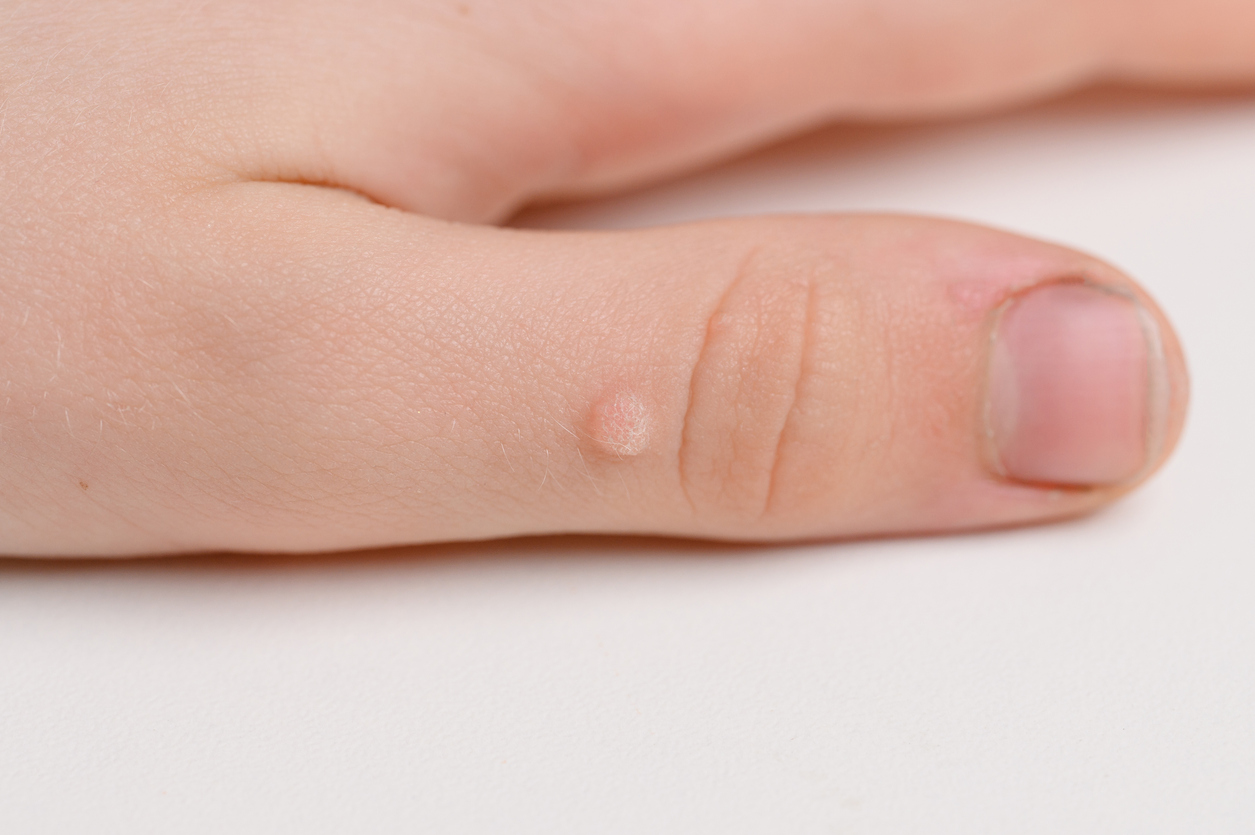
A wart can be especially frustrating when you think it’s gone and another growth appears in the same area. Warts are caused by certain types of human papillomavirus, or HPV, and can spread from one part of the skin to another. For adults and children in Houston, Texas, our team at DermSurgery Associates provides wart treatment for growths that aren’t clearing on their own. Scarlett Boulos, MD, FAAD is board-certified in both dermatology and pediatric dermatology and completed fellowship training in pediatric dermatology at Children’s Hospital of Philadelphia.
Why Can Warts Be So Stubborn?
Warts develop when HPV infects the upper layers of the skin. Because the virus is contagious, touching a wart and then another area may contribute to its spread. Contact with an object that has touched an affected area can also pass the virus along.
That means a spot near the original wart isn’t necessarily the exact same growth returning. It may be a nearby area that has developed another wart.
Treatment may also take time. Some growths respond quickly, while others require repeat care before they fully clear. Location, size, and the type of wart can all influence the approach.
Can Everyday Habits Spread Warts?
Picking or scratching a wart can irritate the skin and make it easier for HPV to reach neighboring areas. Shaving directly over a growth can create a similar problem.
Simple habits may help limit spread:
- Avoid picking, scratching, or biting at a wart
- Wash your hands after touching the area
- Don’t share items that directly contact the affected skin
- Be careful when shaving near a wart
These considerations are especially relevant for families, since warts are common during childhood. Our pediatric dermatology services are designed for skin conditions affecting patients from birth through age 18, including concerns that haven’t responded well to home care.
When Is It Time to Stop Treating a Wart at Home?
Home treatment may be reasonable for some common warts, but there are situations where seeing a dermatologist makes more sense. Consider an examination when the growth:
- Continues despite home treatment
- Hurts, itches, burns, or bleeds
- Changes noticeably
- Appears in several areas
- Is difficult to identify
- Causes concern because of its location
If you aren’t certain that a bump is actually a wart, getting it checked is particularly important. Our lumps, bumps, and biopsies services include evaluation of warts and other raised skin growths. When appearance alone doesn’t give enough information, further evaluation may be appropriate.
What Can Dermatologists Do for Stubborn Warts?
There isn’t one treatment that works best for every person. Through our medical dermatology services, wart care may involve topical medication, liquid nitrogen to freeze the affected tissue, or surgical treatment for certain cases.
Your dermatologist can consider the number of warts, where they are located, how long they’ve been present, and what you have already tried. That individualized approach is particularly helpful when a growth keeps returning or multiple spots have appeared.
Get Help With a Wart That Won’t Go Away
If home remedies haven’t solved the problem, it may be time to find out why. DermSurgery Associates treats adults and children with stubborn or recurring warts throughout Houston and Greater Houston, Texas. Call 713-791-9966 or contact us to have the area evaluated by our dermatology team.
