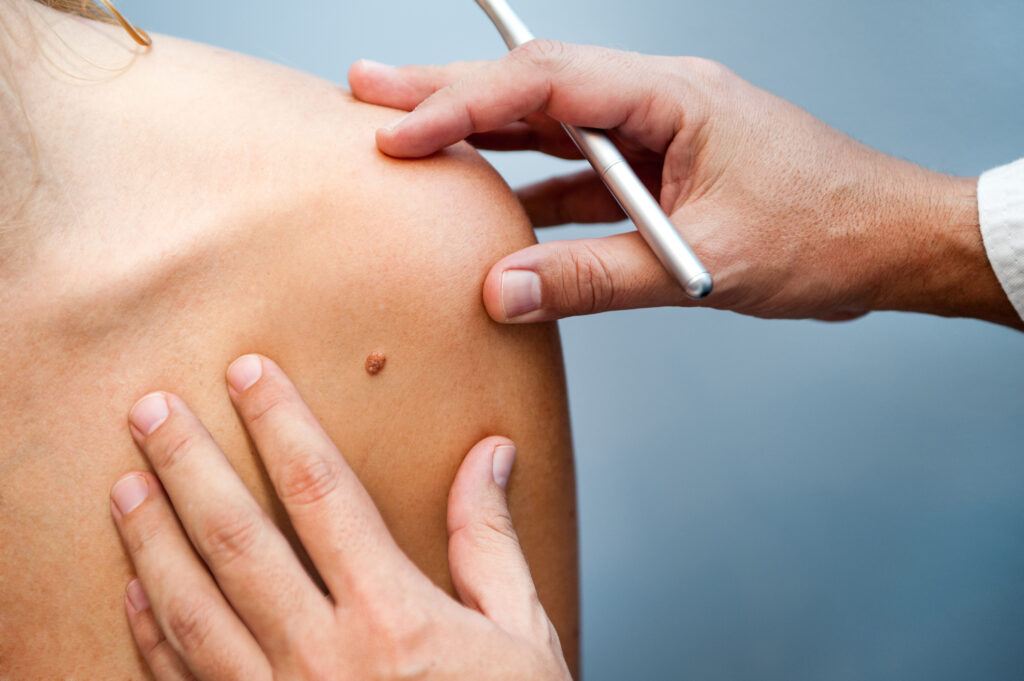
What Is a Skin Cancer Screening?
A skin cancer screening is a visual examination of the skin for moles, growths, sores, or other changes that may need closer attention. Basal cell carcinoma, squamous cell carcinoma, and melanoma are the three major types of skin cancer.
A screening may look at the skin more broadly, while a mole check can center on one or several specific moles that concern you. The type and frequency of examination you need will depend on your history and what your dermatologist finds.
Who Should Talk With a Dermatologist About Screening?
Anyone can develop skin cancer. Risk can be higher if you have had skin cancer before, have a family history of the disease, have numerous or certain types of moles, or have a history of significant sun exposure, sunburns, or tanning. Age and natural skin characteristics also play a role.
You do not need to diagnose a suspicious area yourself before making an appointment. Bring new, changing, itching, bleeding, or nonhealing marks to your dermatologist’s attention.
What Happens During a Skin Cancer Screening?
We review your medical and family history and ask about changes you have noticed. Your dermatologist then examines the areas of concern and, when appropriate, other parts of the skin that can be easy to overlook.
Seeing an unusual lesion does not mean that it is cancer. If the appearance raises concern, a biopsy may be needed to make a diagnosis. Our lumps, bumps, and biopsies services allow suspicious tissue to be examined more closely.
When a biopsy confirms skin cancer, the next step depends on the cancer type, location, size, and other clinical factors. Mohs surgery is used for certain skin cancers, but not every diagnosis calls for Mohs.
Between appointments, keep an eye on your scalp, nails, soles, between the toes, and other areas that are easy to miss. A spot that differs from the others or begins changing, itching, or bleeding deserves attention.
A Reputation Built on Results
Why Choose DermSurgery Associates for Skin Cancer Screening in Houston?
Our practice brings screening, biopsy evaluation, medical dermatology, and skin cancer surgery together within one dermatology group. Dr. Goldberg has spent decades treating and teaching about skin cancer and Mohs surgery, while our broader physician team includes board-certified dermatologists with experience across medical and surgical dermatology.
That continuity matters if an exam leads to additional testing or care. You can move from evaluation to the next clinical step with a team already familiar with your skin concerns.
Frequently Asked Questions
Have a Concerning Spot Checked in Houston
You do not have to decide from a mirror or a photo online if a skin change is worth examining. Contact us at DermSurgery Associates or call 713-791-9966 to arrange a skin cancer screening in Houston or Greater Houston, Texas.