
Brown spots and uneven texture are common signs of years spent in the sun, but not every sun-related mark belongs in the cosmetic treatment room. In Houston and Greater Houston, Texas, DermSurgery Associates provides sun damage treatment after first determining whether the change is cosmetic or needs medical attention. Lucile White, MD, FAAD is a board-certified dermatologist with fellowship training in Mohs surgery, lasers, and cosmetic dermatology.
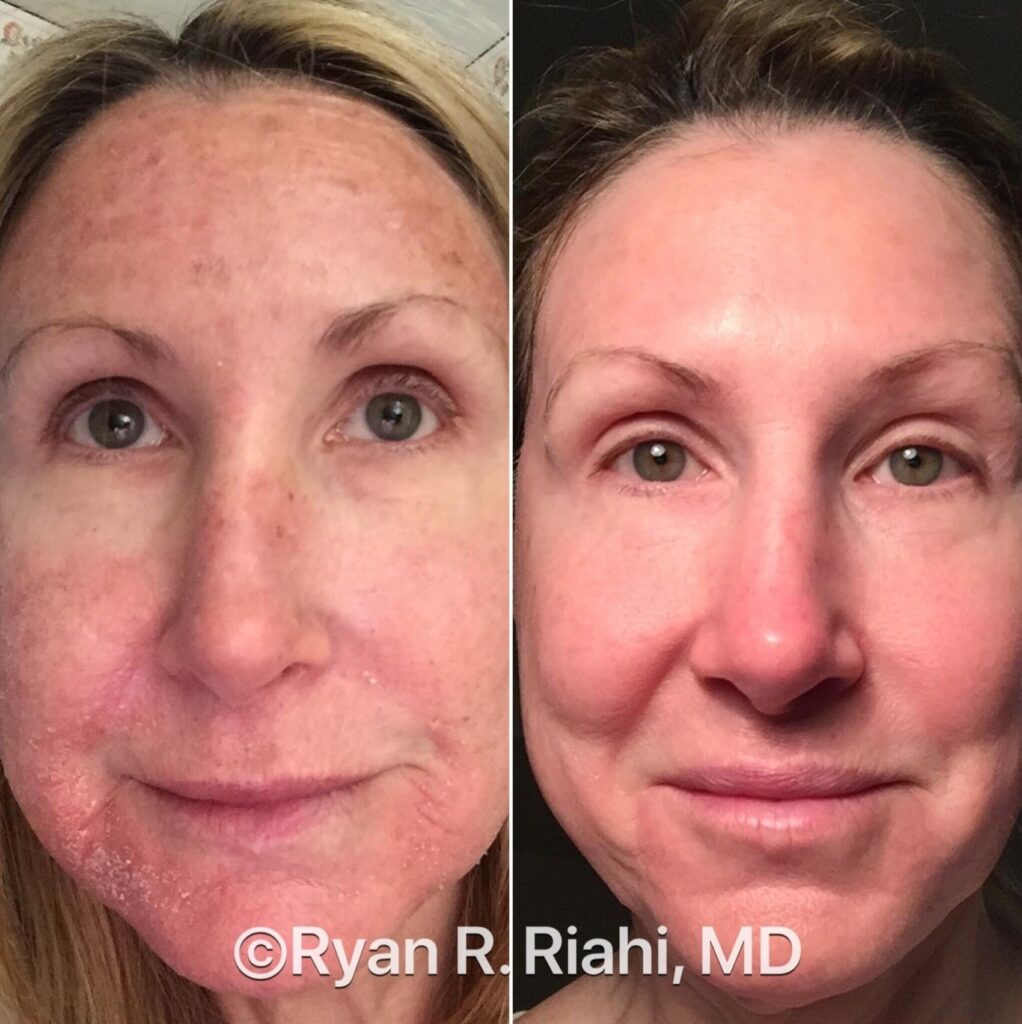
What Does Sun Damage Look Like?
Ultraviolet exposure accumulates over the years and can lead to several visible changes, including:
- Freckles and age spots
- Uneven pigmentation
- Blotchy color
- Fine lines
- Rough or uneven texture
- Other signs of premature skin aging
Cosmetic procedures can lessen some of these changes, but they cannot erase a lifetime of UV exposure.
It is also important not to assume every brown or rough spot is harmless. Actinic keratoses are precancerous growths related to UV exposure, and some skin cancers can resemble ordinary pigmentation. A new, changing, scaly, bleeding, or nonhealing lesion should be medically examined before cosmetic care. Our skin cancer screening services are available when a spot raises concern.
Who May Be a Candidate for Cosmetic Sun Damage Treatment?
Cosmetic care may be appropriate when you are bothered by stable sun spots, uneven coloration, fine lines, or texture changes and the areas being treated have been evaluated as appropriate for rejuvenation.
Your complexion, medical history, previous procedures, amount of photodamage, and tolerance for recovery all influence which method may be considered. Suspicious lesions should be diagnosed first rather than covered, lightened, or resurfaced.
A Reputation Built on Results
I’ve been seeing Dr. Ryan Ryahi since 2020 for my psoriasis, after trying several different treatments with other doctors without much success. He was finally able to get my psoriasis…
Always a delight. Dr Glaich and her assistant have great attitudes and always help medically
The staff and doctors are very courteous and professional and handled all my concerns and needs. I highly recommend this office of your dermatology needs.
Which Treatments Can Improve Visible Sun Damage?
Several treatments available through our practice work in different ways.
Fraxel® fractional laser resurfacing may improve sun-related pigmentation, fine lines, and uneven texture while stimulating collagen remodeling.
Intense pulsed light (IPL) uses light energy to work on excess pigment and visible blood vessels. It may be useful when brown spots, redness, or blotchy coloration are the main concern.
Chemical peels are another possibility for selected surface changes. The depth of a peel affects both what it can improve and how much healing is involved.
Your examination helps us narrow the choices based on what you actually want treated.
What Can You Expect After Treatment?
Recovery looks different for each procedure. After IPL, brown spots may temporarily darken before they flake or fade. Fraxel recovery varies with the type and intensity of resurfacing, while chemical peels range from mild exfoliation with relatively little interruption to deeper peeling that requires more healing.
Temporary redness, swelling, sensitivity, peeling, or changes in pigmentation are possible after light-based and resurfacing procedures. You will receive aftercare instructions specific to the procedure you undergo.
Sun protection remains important after the skin heals. New UV exposure can create additional discoloration and shorten the visible benefit of cosmetic care.
Why Choose DermSurgery Associates for Sun Damage Treatment in Houston?
One advantage of receiving cosmetic care through a dermatology practice is that we can examine a questionable mark before attempting to lighten it. Dr. White’s fellowship training spans both Mohs surgery and cosmetic laser treatment, giving her experience on both sides of that distinction.
Ming H. Jih, MD, PhD, FAAD is also board-certified and fellowship-trained in laser and dermatologic surgery. Her current services include sun damage treatment, Fraxel, IPL, and other technologies used for pigment and resurfacing concerns.
Frequently Asked Questions About Sun Damage Treatment
No. Cosmetic procedures may improve discoloration, texture, and fine lines, but they cannot undo all of the cellular effects of previous UV exposure.
No. Several skin conditions can look brown or pigmented. A spot that is new, changing, bleeding, scaly, or otherwise unusual should be examined before cosmetic treatment.
No. Cosmetic procedures do not replace sunscreen, protective clothing, self-checks, or professional skin examinations when indicated.
That varies with the procedure and the amount of visible photodamage. Some treatments work best as a series, while others may require fewer visits.
Often, yes. Treatment selection and settings require care because some procedures carry a risk of unwanted pigment changes. Your complexion is considered when we plan treatment.
Use broad-spectrum SPF 30 or higher, seek shade when possible, wear protective clothing and a wide-brimmed hat, and avoid tanning. Consistent sun protection can help limit new photodamage.
Explore Sun Damage Treatment in Greater Houston
If age spots, uneven color, or rough texture have become more noticeable, we can examine your skin and discuss the cosmetic options available. Contact us to request a consultation with DermSurgery Associates in Houston or Greater Houston, Texas, or reach our office at 713-791-9966.
