
Actinic keratosis can feel like a small rough patch, but it should not be brushed off as dry skin. In Houston, Texas, DermSurgery Associates provides medical, surgical, and cosmetic dermatology through a team that includes dermatologists and board-certified physicians, Mohs surgeons, and experienced mid-level providers. Our team evaluates sun-damaged skin, diagnoses suspicious lesions, and offers actinic keratosis treatment to help lower the chance of future skin cancer concerns.
Topical Treatment for Melasma Before & After Photos
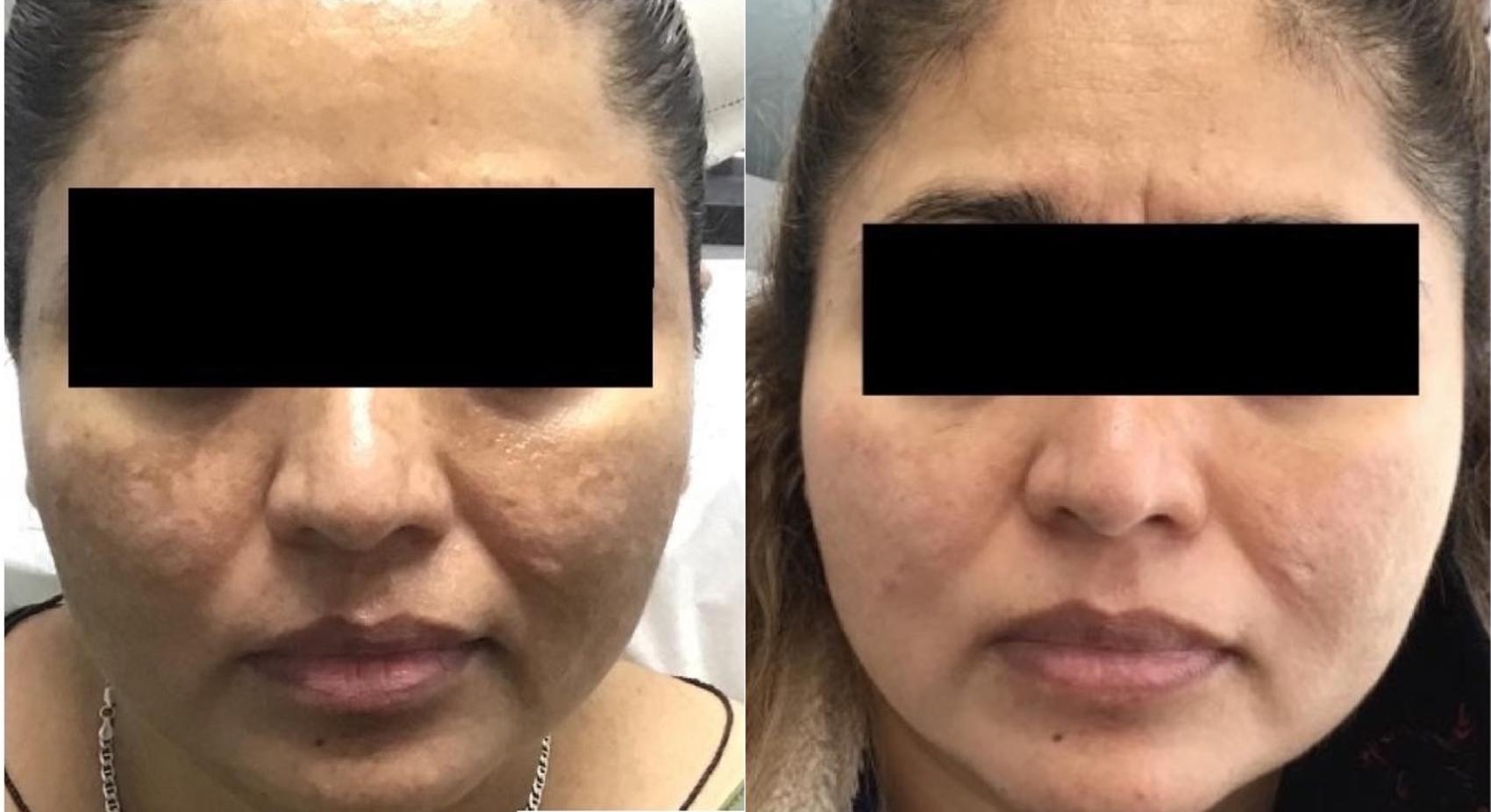
This woman came to DermSurgery Associates at our Beechnut Suite 290B location in Houston for treatment of melasma on her face. She had discoloration on her cheeks. Her provider prescribed a topical treatment to fade the appearance of the melasma. After 6 weeks, the improvement in her skin tone is dramatic.
What Is Actinic Keratosis?
Actinic keratosis, often called AK or solar keratosis, is a rough, scaly, or crusted spot that develops after years of ultraviolet light exposure. These patches commonly appear on areas that receive frequent sun, including the face, ears, scalp, lips, neck, forearms, and backs of the hands.
AK may be easier to feel than see. Some people describe the spot as sandpapery, dry, tender, or irritated. It may look pink, red, tan, brown, or skin-colored. Because actinic keratosis can resemble other skin conditions, a dermatologist should examine any rough or scaly spot that does not go away.
Why AK Should Be Evaluated by a Dermatologist
Actinic keratosis is considered precancerous because some AK lesions can develop into squamous cell carcinoma over time. Not every spot becomes cancerous, but it is not possible to know which lesions may change without a proper skin exam.
A dermatologist can determine whether the spot is actinic keratosis, another form of sun damage, or a lesion that needs biopsy. If you have multiple rough patches, a history of heavy sun exposure, tanning bed use, or previous skin cancer, regular skin cancer screenings may also be recommended.
What Treatment May Involve
The right treatment depends on the number of lesions, their location, your skin type, and whether additional testing is needed. Your care plan may include:
- Liquid nitrogen: Freezing the lesion can help remove isolated AK spots.
- Topical medication: Prescription creams may be used for visible lesions or areas with widespread sun damage.
- Photodynamic therapy: Photodynamic therapy uses a photosensitizing medication and light activation to treat damaged skin cells.
- Biopsy: If a spot looks suspicious, lumps, bumps, and biopsies may be needed to confirm the diagnosis.
How to Reduce the Risk of Recurrence
Actinic keratosis can return, especially when the skin has years of UV damage. Daily sunscreen, protective clothing, wide-brimmed hats, and avoiding tanning beds can help protect your skin. It is also important to check your skin between dermatology visits and report spots that bleed, crust, grow, hurt, or do not heal.
Why Choose DermSurgery Associates for Actinic Keratosis Care in Houston?
Patients across Houston and Greater Houston, Texas, choose DermSurgery Associates because medical dermatology, skin cancer detection, Mohs surgery, and cosmetic skin care are all available through one practice. Your visit can include a careful evaluation of the lesion, a discussion of treatment options, and guidance on long-term skin monitoring instead of only treating the visible spot.
With access to board-certified dermatology care, advanced treatment options, and ongoing skin health guidance, you can better understand what is happening on your skin and what to do next.
Frequently Asked Questions
Actinic keratosis is not skin cancer, but it is considered precancerous. Some AK lesions can develop into squamous cell carcinoma, which is why evaluation and treatment are important.
Actinic keratosis often feels rough, dry, scaly, or sandpapery. It may be easier to feel than see, especially on the face, scalp, ears, hands, or forearms.
Yes. Treatment can remove or improve current lesions, but new spots may develop if the skin has ongoing sun damage. Regular skin checks and sun protection can help reduce future risk.
Schedule a dermatology visit if a rough spot lasts more than a few weeks, bleeds, crusts, becomes tender, grows, or keeps returning. These changes should be checked even if the spot seems small.
Sunscreen can lower your risk of new sun damage, but it cannot reverse all past UV exposure. Daily sun protection is still one of the best ways to reduce future actinic keratosis and skin cancer risk.
Schedule Actinic Keratosis Treatment in Houston
Rough, scaly, or recurring spots should be checked by a dermatology team that can evaluate both sun damage and possible skin cancer risk. DermSurgery Associates offers actinic keratosis evaluation and treatment for patients in Houston and Greater Houston, Texas, with access to medical dermatology, skin cancer screening, and advanced treatment options when needed. To request an appointment, contact us or call 713-791-9966.
